Reflections on Cambodia, Buddhism and Music

Saturday, August 06, 2005

Living in God's House

I'm speaking at the Presbyterian Church in Chinatown this Sunday (August 7th). Below is a general outline of what I will be saying.

Good morning! This summer I lived at Cameron House as part of the summer staff, where I worked as the coordinator for the 3rd and 4th grade department of the Cameron Ventures Program. This year, our department was blessed with ten wonderful leaders and over thirty highly energetic kids.

I graduated from high school in San Francisco three months ago and this was my first summer at Cameron House. I found out about Cameron House from my experience here at PCC, to which I first started coming as part of a research project during my senior year.

When I was in high school, I never thought I would end up attending a Christian church, much less working at a place like Cameron House. As a Buddhist, I never had much interest in the Christian faith of my ancestors. I found spiritual fulfillment in the Buddhist tradition of meditation and mindfulness; I had little interest in Christianity.

However, my experience at PCC changed my view. This church introduced me to an open-minded, socially aware, and justice-seeking model of spirituality which really appealed to me. I don't mean to say that I am now less of a Buddhist than before, but I now feel comfortable living with the two religions side by side in my heart.

And so, today I'd like to speak about my experience this summer in terms of what it means to live in God's house. One meaning of what it is to live in God's house is simply living in a Christian community, a community where we make a conscious and explicit commitment to live honestly before God. To live honestly means that we take responsibility for all of our actions, words and attitudes, and to live before God means to live humbly, in respect and wonder. I'd lived in other spiritual communities before, but I'd never lived in a Christian community before coming to Cameron House. I am not without my qualms about Christianity—about evangelism, for instance—and I don't hesitate to say that I would probably feel uncomfortable in many other Christian congregations in this country. But there are aspects of the Christian life at Cameron House that I have come to appreciate very much.

At Cameron House's youth programs, we work to create an environment that balances and fosters physical, mental, social and spiritual development. These four aspects of growth are outlined in the Gospel of Luke, and the expectation is that we model our lives and our development on that of Christ. So much of our media-saturated, hyped-up, heart-broken and suffering world lacks this principle of balance, and our children are not encouraged to grow into their full potential, especially in the spiritual realm.

My time with the kids and high school leaders this summer gave me the chance to encourage their balanced development by working on devotions—spiritual lessons—for the kids and working with the leaders to develop creative and meaningful devotions of their own. I encountered a fair amount of resistance, from the kids, from the leaders, and even from myself, in making these devotions a part of every day. And it forced me to step away from my own perspective and get into the heads of the kids and youth, and see what was meaningful and relevant—spiritually relevant—to them.

Let me offer you an example. A couple of weeks ago, my department was struggling, and the problems were not with the kids, but between my leaders and me. In the end, everything worked out, and to the credit of my leaders, they were able to transform their negative actions into positive lessons for themselves, for me, and for the kids. They accomplished this by creating devotions that spoke to the choices they had made and the lessons they had learned, and I was impressed and moved by their sincerity and thoughtfulness. This sort of transformation is, in my eyes, the essence of the Christian life, that our unwholesome thoughts and deeds may be transformed into what is wholesome and good, through our will and that of God. And I am thankful that we worked out our mistakes in the context of a Christian community, because it was our shared life in God's house that made everything possible.

However, beyond the simple fact of living in a Christian community, there is a further meaning of what it means to live in God's house that I learned about over the summer. For me, God’s house is the wealth of peace, joy and contentment that is available—through the grace of God—in the present moment. To live in God’s house means to live in gratefulness—mindfully, lovingly, slowly but dearly—so that the wonder of life, the wonder of being alive, is fully available to us. The door to God’s house is always open—it is only through our self-centered wills and desires that we cannot find it.

I cannot live this way very well. I find it difficult to slow down and truly appreciate the people who are around me. It’s hard to for me to remember to live mindfully, to live humbly, in wonder. Usually I’m carried away by worries about the past or the future or simply desires and emotions in the present—I rarely can just take a breath and appreciate the whole breath, or listen without judgment to every word someone is saying. But this summer I have learned that when I do take the time to enter the present moment, offer thanks for what I am blessed with, and let God take me in to God’s house, then everything works out better.

This summer, I was called to find resources of patience with the kids that I didn’t know I had. I was called to find energy and enthusiasm to make each day fresh and new. I was called to reconcile conflicts that I struggled to identify with and understand. And much of the time, I didn’t succeed at these things. But remembering to live gratefully in God’s house was a source upon which I could rely to see and care for the kids and leaders more clearly and more carefully. Living in God’s house—in touch with the Holy Spirit—allows us to be in touch with God’s unconditional love and the seeds of unconditional love in ourselves. When we are aware of God’s unending love for us, we begin to see God in other people and appreciate them in their highest potential.

Let me offer you another example. Over the course of the summer, I ended up spending a good portion of my time at Cameron Ventures with one of the kids in my department who really struggled with his anger. I often encountered him fighting with the other kids or physically expressing his frustration on the leaders. Often, together with one of my leaders, I sat him down outside the group and had a conversation with him about his behavior. These conversations were difficult, but they revealed to me that he knew he was struggling with his emotions as much as we were. Moreover, I realized that if I was angry or showed any frustration myself, we wouldn’t be able to move forward. Each day had to be a clean slate, without making judgments about him from his past behavior. And I noticed that when I took the time to remember that God’s house is always here, that the present moment is always here, that each and every person is overflowing with God’s love, we were able to reconcile his behavior and come to a solution. It seemed that when we let ourselves return to God’s house and took refuge there, God took care of the situation in a way that no forcing or extra effort on my part could ever do.

A couple of hours before our Parent’s Night, an annual celebration of the kids and their talents at BYP and Ventures, the same kid stormed out of the room where we were rehearsing and proceeded to shout at me and the leaders. He refused to perform that night and was threatening to break things. It took a long time to reach him, to really communicate with him and have a conversation about why he was so angry. I began to ask him about his anger: where he felt it, what color he thought it was, what shape it had, and other physical qualities of his anger. He said it was a deep, deep red and in the shape of the Devil. He was an exceptionally gifted drummer, so I asked him what the beat of the Devil was. Confused, he said it was just random rhythms, not conforming to a particular beat. Eventually, he worked through his anger and performed with great gusto and enthusiasm that night.

However, for me the real miracle came the next day, when he came running up to me with a big smile on his face, saying, “Trent! Trent! Remember when yesterday you asked me what beat the Devil had? Well, I just figured it out. It goes like this: umph chick chick ahhh boom boom, umph chick chick ahhh boom boom…” I was deeply touched by this kid in that moment. The day before, I was barely able to understand his emotions, much less work with him and his anger constructively, but the next day he inspired me with his radiant wonder and excitement. I was overjoyed, and I felt thankful for not passing judgment on him the day before, but instead letting myself enter God’s house and letting the Holy Spirit transform the situation. Working with kids at Cameron House has constantly reminded me that every person has something to offer that is unique, inspiring, and infinitely precious.

I feel exceptionally fortunate to have spent the summer at Cameron House, and to have become familiar with a Christian community, one that is welcoming, vibrant, and socially engaged. And I am thankful to have worked and grown together with a wonderful group of kids and leaders. Most of all, however, I am grateful that God’s house opens its doors every moment of every day, that peace and transformation are indeed possible, and that the Holy Spirit can be present in our lives. May the peace of Christ be with us and may God’s house always be our refuge and our strength. Amen.

Saturday, July 30, 2005

the scent of summer in the homeland


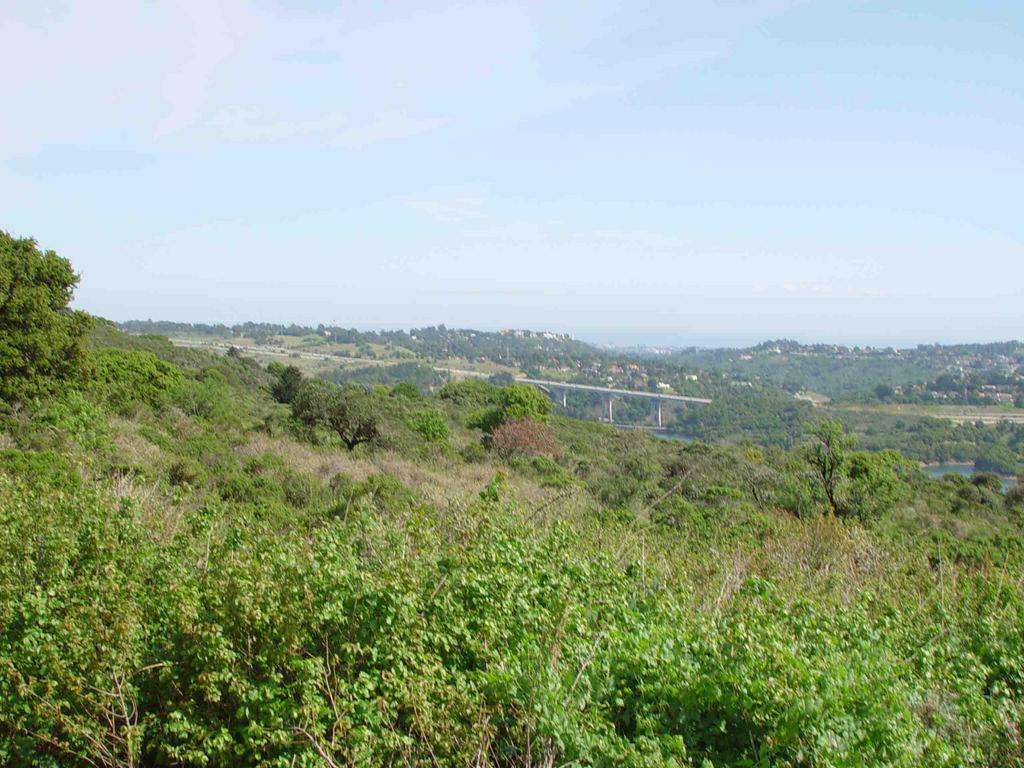
I breathe in and joy washes through me. The scent of summer--a mix of dust, dry grass, ocean winds, pines and wildflowers--reminds me I am home. I revel in the majesty of the landscape, the sweep of the green hills and the blue mountains in the distance, the dry heat, the ants that are crawling across the page and up and down my spine; they, too, are my friends, my compatriots.

I sit outside on the side of the road because this is my homeland, and in less than twenty days I leave for Cambodia. As Dogen Zenji says, "Time moves from present to past"--I already miss this place, this moment. The weeds and rocks here are dear to me. They call me back to my childhood and the wonder of being alive. A handful of dry grass is infinitely precious, irreplacable.

What will it be like to depart from familiarity for a year? I stare at the sun and sneeze.

Crickets sing on one side of me while a river of cars flows past on the other. I sit at the edge of certainty. Here, I know what a summer day is, when the sun rises and when the sun sets. But I don't know a monsoon, much less monsoon season.

I place my hand on the Earth and feel her warmth. Geologic time stretches fault lines and gopher holes into a landscape that rests peacefully in the present moment.

Worries now seem so distant, so useless. I touch the unexpectedly tender leaves of a sticky green weed. The stickiness lingers on my fingers as a momento of my country. I love my country but most of all I love my county, San Mateo, overfull with the history of the Miwok, the Franciscan monks, and white-tailed deer. And native plants, too numerous--too wonderful--to mention.

At home I'm packing my bags, my mind full of Cambodian history and Khmer phrases and anger and frustration about my work and great joy about my work. But here in the fresh air and with scores of ants crawling all over me the joy and frustration and Kampuchean battlefields are one. A sheriff just pulled over to check on me. Sometime I take a breath, feel the Earth beneath me, and realize that I'm having a wonderful day.

Les Haiku de Ryokan

some english translations from the french versions by joan titus-carmel (Paris: Editions Verdier, 1986)


aomitaru
naka ni kobushi no
hanazakari

in the green brush
a single magnolia flower
in full bloom

aki hiyori
senba suzume no
haoto kana

clear autumn sky
ten thousand sparrows fly
the sound of their wings

ake mado no
mukashi o shinobu
sugare yume

the open window
the whole past returns to me
better than a dream

ame no furu
hi wa aware nari
Ryokan bo

days of rain
flooded with sadness
the monk Ryokan

ara ike ya
kawazu tobikomu
oto mo nashi

the new pond
a frog jumps in
no sound at all

iza saraba
ware mo kaeran
aki no kure

let's go, it's over!
I, too, am running away--
autumn dusk

uguisu ni
yumesama sareshi
asage kana

Ah! the rooster
his song thrusts me from a dream
morning rice

oi oo ga
mi wa sama ni uzu
yuki no dake

a very old man
his body seized by the cold
bamboo under snow

ochitsukeba
koko mo Rozan no
shigure kana

a great peace
here, just as in Rozan
autumn mist

onajiku ba
hana no moto ni te
hito yonen

right at this spot
beneath the blossoming cherry
sleep the night through

kakitsubata
ware kono tei ni
yoi ni keri

an iris
not far from my hut
intoxicates me

kakimogi no
kintana samushi
aki no kaze

picking persimmons--
my golden spheres seized
by the autumn wind

knon miya ya
kobushi no hana ni
chiru sakura

in this sanctuary
fallen on the magnolia--
cherry blossoms

koraya kora
kora ga te o toru
tsutsuji kana

children, let's go!
but these azalias offer themselves
to their hands

shiba taite
shigure kiku yo to
nari ni keri

burning some dead wood
with evening comes the sound
of autumn rain

Suma tera no
mukashi o toeba
yamazakura

Suma temple
that we may know it's story--
wild cherry trees

tsuto nisen
Yoshino no sato no
hanahatami

so that I recall
the country of Yoshino
a basket of flowers

tetsubachi ni
asu no kome ari
yuusuzumi

tommorow's rice
in this iron bowl
evening freshness

hibi hibi ni
shigure no fureba
hito oinu

day after day
the falling of gentle rain
oh! how we grow old

Saturday, July 23, 2005

Summer Reflection

Life is endlessly suprising. I've spent the past six weeks living and working at a Christian social services organization, an environment I never thought I would find myself in. Few experiences in my life have required me to give up my conceptions of myself and of the world as this has. And right in this letting go, this giving up of old conceptions and habits, lies great joy and freedom.

When I first started coming to Sunday Worship at the Presbyterian Church in Chinatown (PCC) as a part of a research project, I never expected that I would end up living at (Donaldina) Cameron House, a Christian social services and youth ministries organization which was founded as a mission branch of the Presbyterian Church, a few months later. I had grown comfortable with the Christian environment at PCC and when the opportunity for a job at Cameron House came up, I was genuinely excited about living in a spiritually grounded place. Several months after the initial decision, I am still grappling with the consequences.

I felt welcomed and accepted from the beginning, so I can't say I really have felt uncomfortable, but the sheer unfamiliarity of the situation bears a certain psychological weight. This weight is not really a burden, but it tranforms my mind, my emotions, my sense of self.

The first week was the biggest shock. In my current position, I am responsible for the care, leadership, and training of ten high school volunteers, who in turn lead a group of about 30 3rd and 4th graders in day camp activities, including games, songs, crafts, devotions and field trips. In the first week, my task was to train the high schoolers to be effective day camp leaders. My main teaching experience was co-teaching a sophmore health class once a week, so I was poorly prepared to teach seven hours each day. My lesson plans were pretty shabby, and I struggled to earn the respect and trust of the leaders. But I can think of no better way to learn to be a better teacher. By the end of the week, I finally felt like I knew what I was talking about, and in my mind I pretended I was ready for the first day of camp.

The kids were actually a whole different story. They are an energetic, easily distracted, and highly likeable bunch. For the past five weeks, my interaction with them has been limited, but highly rewarding. During the day, my main responsibilites are to attend to first aid situations, encourage the leaders to stay on task, and work out discipline issues with the kids. This last bit has been especially challenging, and has forced me to call upon all my resources, which, as it turns out, mostly consist of other people. I have learned greatly from consulting with my peers and other co-workers, but I found the most important resource in dealing with a kid who struggles to cooperate or follow the rules is the kid himself. Most of the time, the kid knows the solution more than I do, and the best course of action is to let her find it for herself. I find this requires more patience, trust, and open-mindedness than I possess, and thus I am forced to grow.

The living situations teaches me a great deal as well. I notice that whatever bad, unhealthy, or otherwise unwholesome habits I have at home have tended to disappear when I live in close promixity or cooperatively with others. I can't say I do the dishes, make lunch, clean up after myself, or take out the recycling very often at home, but when I'm at Cameron House I do these things without even thinking. I really love this part about living with others, and it fills me with more energy and vigor than I have at home. Furthermore, I'm living in the city, where everything seems close at hand, and in Chinatown, a district of which I knew very little of before this year. It is an amazing feeling to wake up and walk out the door and myself in a local temple or in a local church, places that once seemed so far away.

There are other aspects of my life here that equally rewarding, but a great deal more confusing, because they relate to two parts of my identity, my race and my religious practice. As an organization that almost entirely serves Chinese Americans, Cameron House represents a very different environment from the one I have grown up in. At Cameron House, I am not particularly aware of my own whiteness, but I certainly notice when another white person is present. I really have no idea how others change their behavior around me because of my race, but living here forces me to reexamine my own perceptions about race. The answer that comes up for me, time and again, is that I judge people based on their ethnicity very often. I can't claim to understand what it is like to be in the racial minority in American society, but I feel I have a better sense of how ingrained racism is in our society and in our collective consciousness.

The spiritual side of my experience at Cameron House continues to shake and stretch me in new ways. Living in a Christian community where Christian values are appreciated, and to some extent, practiced by young people is inspiring to me as a Buddhist. From my experience at PCC, I have grown comfortable observing and participating in Christian spirituality. What is confusing and unsettling (though ultimately rewarding) for me is that at Cameron House, I am expected to teach not only Christian values, but also faith.

During the first week, I led prayer frequently with my high school leaders. Some were clearly not interested in prayer, but followed along anyway. I also pushed my leaders to do more devotions (activities and lessons drawn from the Bible or Christian spirituality) with the kids, and I worked with them frequently to develop and deepen these devotions. With my red, sunburned skin, plaid shirts, and Texas Rangers hat, I sensed that they thought of me as a "Bible thumper," which, I concede, is a pejorative label. Whether or not this was true, I still did not feel entirely honest propagating Christian teaching to them while hiding my Buddhist practice. Last week, I had a conversation with my high school leaders about this, and I heard a general sigh of relief from them that I was indeed not trying to convert them to a form of evangelical Christianity.

Nevertheless, prayer and devotions are something that I now love, and I have a deep respect for the Christian life. I don't identify as a Christian, but in full honestly I would still say that I am a Christian. I take the life of Jesus as an example of how to live a life of compassion, devotion, and peace-- in this sense I am a Christian. This doesn't mean I am less of a Buddhist, but it does mean that I realize that labels such as "Christian," "Muslim," or "Buddhist" are less important than we make them out to be. During this summer so far, my intention has been to help the kids and the leaders in their spiritual growth and development, whether it be Christian or agnostic or otherwise. I want to instill in them the joy of life, the beauty of the nature, and a sense of graditude for all that they have been given, whether they see God in their lives or not. As I move into the final two weeks of the program, I hope and pray that their lives may be filled with happiness.

Monday, May 30, 2005

A visit to the temple

Yesterday afternoon, I found myself once again at Gold Mountain Monastery, a small Chinese temple on Sacremento and Grant. I had not been for a few weeks, and I had never been on a Sunday before, so I was suprised to witness so many people there to participate in the afternoon's recitation session. We chanted the final portion of the Medicine Master Repantance, which took about two and a half hours. It was almost entirely unfamiliar to me, and as my Chinese reading skills are basically non-existent, I really had very little idea of what we were chanting about.

But the melodies of Chinese Buddhist chants are hauntingly beautiful. There is a considerable amount of musical variation over the course of the ceremony, but not so much that the music becomes distracting. Drums, bells, and chimes accompany a lively array of major and minor modes of the pentatonic scale, with tonal modulations and rhythmic changes at important points of transition in the text. In the Chinese tradition of Buddhism, recitation is seen as a centering spiritual practice akin to seated meditation. And indeed, there is a wonderfully subtle and serene meditative quality to the practice.

Officially, I first starting coming to Gold Mountain Monastery as part of a school project. But I will admit that I was attracted to finding such a place even before that project began. The temple represents a side of Buddhism that it at once deeply devotional and yet makes sense to me, as one who is familiar with the (healthy and unhealthly) skepticism of (primarily white) Western Buddhism. In a little more than a week I will be living about a block from the temple, so I may try to come more often.

After the service, one of the laywomen gestured for me to come to a meditation and study session being held upstairs with two of the resident nuns. The discussion, led by the nuns, took place in the mixture of Cantonese and Mandarin I have become accostomed to hearing. After trying to follow the discussion for a while by examining an English translation of the sutra passage that was the subject of the discussion, I spent a good while trying to formulate a question I had about the passage in Mandarin. In the end, I pretended that I didn't know a word of what was said.

I later wondered what would have happened had I asked the question. First of all, my pronunciation is likely too poor for me to have been understood, so I probably would been detracting from the overall flow of the discussion. But moreover, I wonder about the complex array of racial and cultural dynamics that were incumbent upon my entry into the room.

I feel spiritually nourished and at home at Gold Mountain Monastery, and I connect with the people there on that level, where words and cultural barriers are no longer of any great importance. But I am also curious of the racial and cultural dynamics of the situation. Why, for instance, were the laywomen so eager to have me come to the discussion? They are genuine and incredibly kind people, for sure, and I don't intend to discount that. But at the same time I can't be a young, white male and fit in on a certain level. How do people react to my coming to this temple? Am I always going to be an outsider?

Well, in any event, I really don't know. But I am certainly made more aware of the partularities of my race, my age and my upbringing. My identity does not only affect myself and my own perceptions, but also others and their own perceptions. When I see how each individual life, such as my own, exists only in the context of others, I get a sense of how mutually intertwined our lives really are. I take a breath, and smile.

Tuesday, May 17, 2005

Religious Dialogue

As an independent project this year, me and another student have been conducting a comparative study of two religious congregations in San Francisco's Chinatown. As part of our research, we have been interviewing clergy and lay members at both places. Today was our last interview, with the pastor of the church. It was a remarkable interview on many levels, but it struck me deeply for a few reasons.

First of all, the pastor is wise, tender, brilliant, and open-minded-- a remarkable combination of characteristics in a religious person. His life story was quite compelling, and was very different from how I would have imagined that of Christian pastor to have been.

I came to Buddhism after a period of intense skepticism for religion in general. In my early childhood, my parents brought me and my brother to the local Presbyterian Church. My memories of this time are somewhat vague, but I do remember worship, Sunday school, and the music. I have not really repressed these memories, but I never really cherished them either, perhaps out of skepticism for religion. Christianity made no sense to me, and until recently, I have always felt this way.

Our conversations with the pastor today were illuminating. Although I am now familiar with his church and feel welcomed by the congregation, it was very heartwarming to see a man who faced many of the religious and philosophical questions, and probably many more, that I had faced. Like me, he said that he believes that truth is not limited to one particular religion or sect, and that it is indeed this kind of close-mindedness that has been responsible for many wars and an enormous amount of suffering. I am used to talking to fellow Buddhists who share such views, but it was quite inspiring to hear a Christian with such a tolerant and ecumenical attitude. I was very close-minded myself about Christianity, and the opportunity to have a conversation with this man allowed me to his religion from a new perspective.

What I was most impressed with about this man, however, was that I could be honest with him about my own spiritual aspirations and experiences. His living, loving faith encouraged me in my practice of mindfulness, and his commitment and dedication to service and justice inspired me to further my efforts. It seems to me that our greatest teachers are those who allow us to fully encompass and embrace who we are.

Sunday, May 15, 2005

What are you doing?

What am I doing with my life?

When I ask myself this question, it gives me an opportunity to see how closely my interpretation of my life matches up with what I am actually doing. That is, it forces me to make an effort to live honestly, earnestly, truthfully.

I notice that almost any activity can be worthwhile with the right attitude. What is this attitude? For me, it seems that when I am open-minded and not particularly attached to the merits or faults of an activity, I can proceed mindfully and with a spirit of inquiry, a willingness to learn. But I am not so good at keeping an open mind or maintaining mindfulness in all situations-- indeed, in any situation. For instance, writing or typing can be a very thoughtful and meaningful process, one that aids the process of finding meaning in life and peace with the world. But when it is done without care and mindful awareness, I find it to be a waste of time. The moments in which I can step back, relax, breathe, and be thoughful (rather than being controlled by my thoughts) are very precious because they are few and far between. I don't know if it is possible to always live mindfully, but I would like to try, even if I fail every time.

What I am doing with my life? What can I do that is truly worthwhile, of benefit to all? I don't have an answer to this yet, and I may never. It seems that I usually choose to do things that are benificial to me and that may or may not be benificial to others. But I don't think this is a question of morality or of human nature. It's a question of living moment by moment; slowly, but dearly. If I slow down and become attentive to my motivations and actions, I more often do things that help others, or at the very least do not hurt them.

What I am doing with my life? What are we doing with our life? The only way I can respond to these questions is to slow down and become aware and settled in the present.

Friday, May 13, 2005

Watermelon Meditation

I often notice that my life unfolds in cyclical patterns. My ability to concentrate, the attention I pay to the present moment, the sense of appreciation I have for being alive-- all these come and go, ebbing and flowing in cycles. Sometimes I am swept up in a current of energy and lose control of life. Sometimes I find myself mired in thoughts of longing and discontent. Sometimes I wake up and my breath is right there at the tip of nose, my mind is clear, colors are vivid but my eyes are soft, my shoulders are relaxed, and a smile comes to my face-- this is how I want to live. When I wake up like this I wish that all people could be happy, healthy, and at peace.

Most of my thoughts are pretty useless. More than useless, even-- the way I react to them causes suffering. But I find when I remember to come back to the breath, during class, walking on the sidewalk, standing on a crowded bus, typing at the computer or any other moment of the day, I realize the futility of thinking in endless circles, mulling over the same few stories. Then I laugh at myself, or perhaps with myself, and smile. (breath)

From time to time, it can be useful to step back and take a look at what thoughts float around in my brain. I often think about what I'm going to do next. Or what I'm going to write next. This sort of thinking doesn't really create more suffering for me; in fact, it seems to a natural and necessary part of the beauty of human lucidity. But when I get annoyed at my own thinking, the annoyance is extra. Or when I get attached to particular thought, that cycle of thinking does not foster happiness. Thoughts by themselves come and go. I find that if a thought is really important, it will translate into action quickly. Thoughts that I tend to dwell produce a tangled web of thoughts from which it is easy for me to lose a sense of well-being. Whoa! That was confusing to write about! (breath) Maybe I don't understand my mind at all.

Now, I appreciate being able to think; I appreciate my thoughts. But I do find it wonderful to be able to step back from my own thinking and return to what it actually happening. (breath)

Perhaps what I'm writing makes no sense. But the real point is that I feel that I have been away for a long time, maybe since August, maybe for my whole life, maybe for a very, very long time. I've certainly been going to school, enjoying the people around me, laughing, playing music, singing, and other things, but I do not feel like I have been here, in touch my the inklings in my heart, with my deepest intention. I want to come back. I want to return, to be alive, awake in each moment.

I don't really have any regrets about how I have been living, however. My teachers--humans, animals, plants-- always inspire me to live more truly to what the heart says. I endeavor to spend more time with trees and flowers, more time breathing with the wind, walking with the sky. When I say "more time," I don't mean more actual time, as the clock tells it, but more "real" time, time spent in touch with reality. (breath)

But my life so often seems to go in cycles. For a while, I feel in touch with the world, in touch with the miracle of life. But then I forget, and I suffer, not on the outside, where I am almost always enjoying myself and other people, but on the inside, where I notice my spiritual energy waning, where I notice my attention fading. This kind of suffering is not really a big deal-- it is not physical suffering, it is not emotional suffering. But it seems it might be at the root of both. This suffering is like a vague sense of discontent, of loneliness, of restlessness. When I become aware of this deep level of suffering, I feel motivated to return to its source and discover the cause. I don't know what the cause is. But I wake up from my thinking and tune into this suffering.

If it is such a gift to be alive, why are we not happy all the time?

Watermelon!
Watermelon!
(To feel better, visualize a watermelon. Watermelons are really big!)

Maybe happy is not the right word. Why are we not at peace?

(breath)